
bridging understanding and disease management
The current landscape of IPF and PPF

Understanding pulmonary fibrosis
PF is a complex and devastating disease1-4
IPF and PPF are life-threatening, difficult to diagnose, and devastating for patients and their families.2-5
IPF6,7 is the most common type of chronic, progressive fibrotic interstitial lung disease (ILD).
The cause of IPF is unknown and patients experience significant disease burden and risk of early mortality.
PPF8-11 refers to a subset of non-IPF ILDs characterized by progression—worsening of respiratory symptoms, decline in forced vital capacity (FVC), and increased extent of fibrosis seen in high-resolution computed tomography (HRCT) scans.
Associated etiologies include rheumatoid arthritis (RA), systemic sclerosis (SSc), and hypersensitivity pneumonitis (HP).

Patients with connective tissue disease-associated interstitial lung diseases (CTD-ILDs) can develop IPF12,13

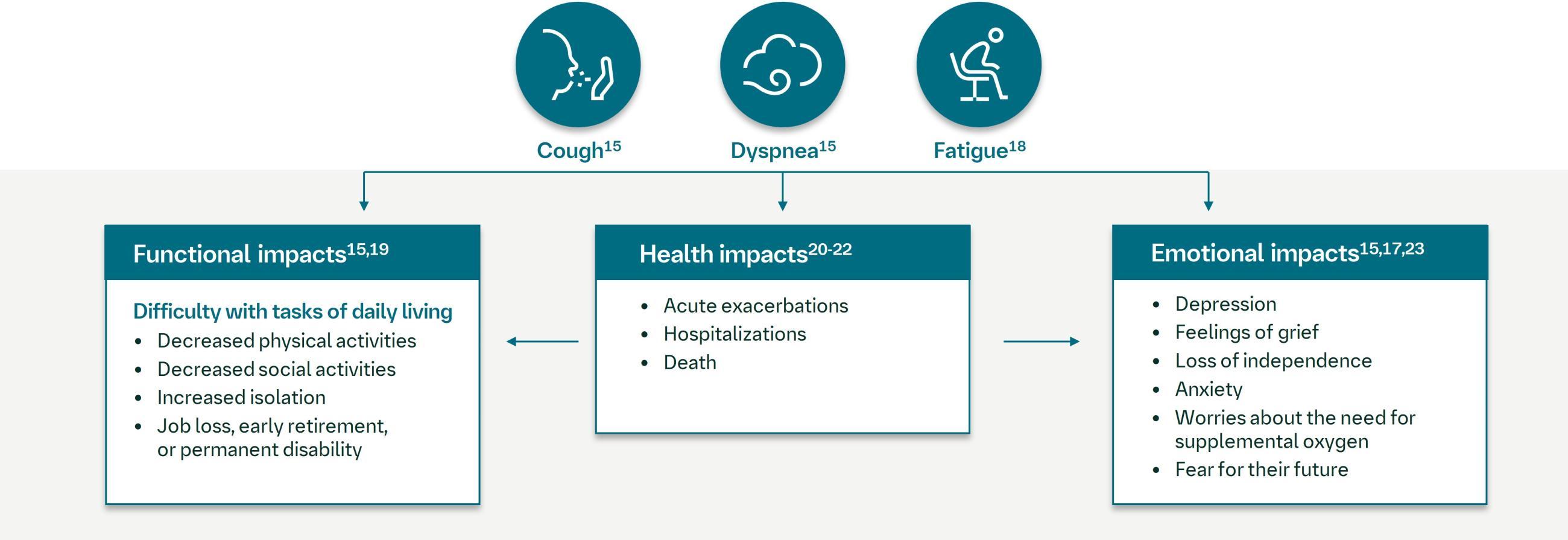
The impact of PF is life-changing with significant patient burden14,15
The symptoms of PF alter a patient’s life in many ways, from physical difficulties and increased health risks to detrimental impacts on their mental well-being and quality of life.15-17
PF carries a life-threatening prognosis2-4
Deadly indicators of disease progression, such as acute exacerbations, are associated with poor prognosis and a high rate of mortality for patients with IPF or PPF.20,21

Mortality
Median survival time for IPF is 3 to 5 years4,24
This represents a worse survival rate than many cancers, including breast cancer, prostate cancer, skin cancer, and lymphoma

Acute exacerbations
~1 in 5 IPF patients26 will experience an acute exacerbation within 3 years of diagnosis
Mortality
Risk of mortality with PPF varies based on the underlying etiology
•RA: Patients have a 3x greater risk of death if they develop an ILD27-30
– Median survival time: 3-7 years30,31
•SSc: More than ⅓ of SSc-related deaths are due to ILD32-37
– Median survival time: ~4 years38,39
•Chronic hypersensitivity pneumonitis: Median survival time of ~7 years40

Acute exacerbations
Postexacerbation mortality with PPF ranges from 33% to 83% 21
•In a Japanese study, 11% of patients with SSc-ILD experienced an acute exacerbation of ILD during the follow-up period, and all resulted in death41
•In a Danish study, 21% of deaths in patients with RA-ILD were caused by an acute exacerbation of ILD, with the majority occurring within the first year of follow-up29
Complexity of diagnosis
Heterogeneity of IPF and PPF makes accurate and prompt diagnosis challenging42
The heterogeneity of IPF and PPF within the patient population, symptom manifestation, and progression makes disease management inherently complex. Further, patients with PPF may have different etiologies, comorbidities, and symptoms. As a result, many patients with IPF or PPF are initially misdiagnosed.43,44
Diseases that can be confused with ILD45
Infectious diseases
Tuberculosis46
Pneumonia8
Respiratory diseases
COPD47-49
Asthma49-51
Bronchitis52
Emphysema49,53
Other conditions
Congestive heart failure54
Allergies55
PF is a common threat across a wide range of ILDs, including CTD-ILDs5
Most patients with CTD-ILDs are at risk for developing PPF at a higher rate than many physicians may realize.12,13 While CTDs differ, common pathogenic pathways to fibrogenesis are shared, irrespective of the trigger for the lung injury.1,3,56-60 The pathogenesis of PPF in CTDs involves the interplay of inflammation and fibrosis early in the course of the disease, making proactive screening essential.1,3,56,57,61
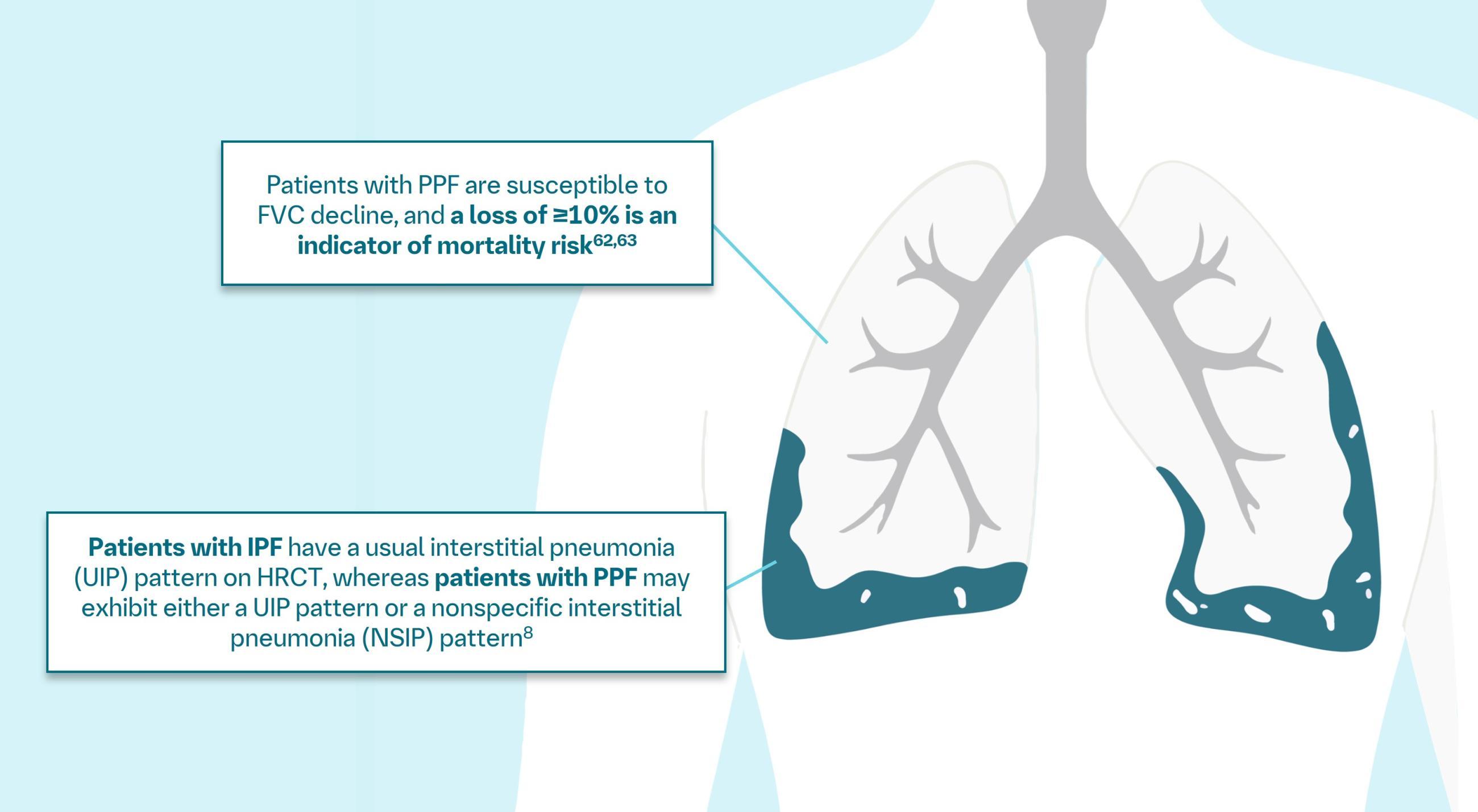
IPF and PPF are relentless conditions with fibrotic and inflammatory components16,64
The underlying mechanisms driving the progression of PF are complex, and the scientific understanding of them is still evolving. Even with treatment, patients continue to experience irreversible lung damage.1

average FVC loss of
~30 to 35 mL/y65
average FVC loss of
~100 to 200 mL/y45,46
Disease progression is similar across IPF and PPF7,13
Disease progression is characterized by 7,13:


Importance of safeguarding lung function
Disease management remains challenging
When accurate diagnosis is delayed, progression may be more advanced or continue to advance, further complicating disease management.42,43
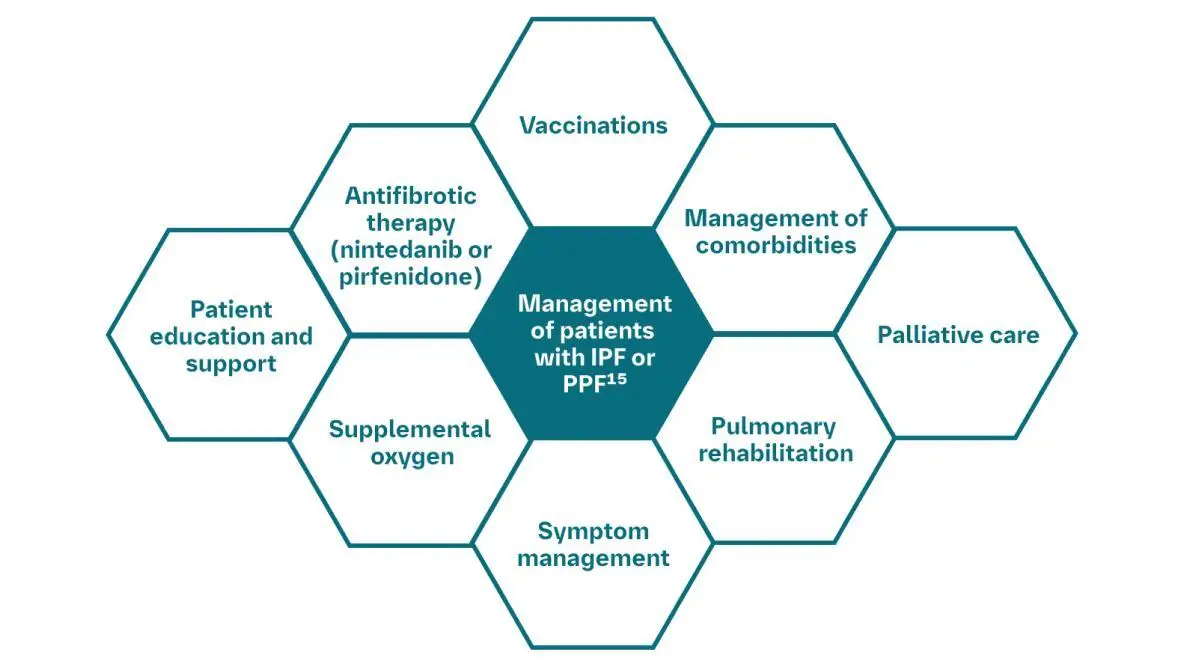

Vigilance is key to protecting patients65,66
Safeguarding lung function remains a top priority to help patients because even small losses can have big impacts.
COPD, chronic obstructive pulmonary disease; CTD, connective tissue disease; CTD-ILD, connective tissue disease-associated interstitial lung disease; DLCO, diffusing capacity of the lungs for carbon monoxide; FVC, forced vital capacity; HP, hypersensitivity pneumonitis; HRCT, high-resolution computed tomography; ILD, interstitial lung disease; IPF, idiopathic pulmonary fibrosis; NSIP, nonspecific interstitial pneumonia pattern; PF, pulmonary fibrosis; PPF, progressive pulmonary fibrosis; RA, rheumatoid arthritis; SSc, systemic sclerosis; UIP, usual interstitial pneumonia.
-
Distler JHW, Györfi A-H, Ramanujam M, Whitfield ML, Königshoff M, Lafyatis R. Shared and distinct mechanisms of fibrosis. Nat Rev Rheumatol. 2019;15(12):705-730.
-
Lee H, Kim SY, Park YS, Choi SM, Lee JH, Park J. Prognostic implication of 1-year decline in diffusing capacity in newly diagnosed idiopathic pulmonary fibrosis. Sci Rep. 2024;14(1):8857.
-
Kolb M, Vašáková M. The natural history of progressive fibrosing interstitial lung diseases. Respir Res. 2019;20(1):57.
-
Martinez FJ, Collard HR, Pardo A, et al. Idiopathic pulmonary fibrosis. Nat Rev Dis Primers. 2017;3:17074.
-
Varone F, Inoue Y, Richeldi L. Twenty-five years of Respirology: advances in idiopathic pulmonary fibrosis. Respirology. 2020;25(1):20-22.
-
Strykowski R, Adegunsoye A. Idiopathic pulmonary fibrosis and progressive pulmonary fibrosis. Immunol Allergy Clin North Am. 2023;43(2):209-228.
-
Rajan SK, Cottin V, Dhar R, et al. Progressive pulmonary fibrosis: an expert group consensus statement. Eur Respir J. 2023;61(3):2103187.
-
Lederer C, Storman M, Tarnoki AD, Tarnoki DL, Margaritopoulos GA, Prosch H. Imaging in the diagnosis and management of fibrosing interstitial lung diseases. Breathe (Sheff). 2024;20(1):240006.
-
Lederer C, Storman M, Tarnoki AD, Tarnoki DL, Margaritopoulos GA, Prosch H. Imaging in the diagnosis and management of fibrosing interstitial lung diseases. Breathe (Sheff). 2024;20(1):240006.
-
Maher TM, Wuyts W. Management of fibrosing interstitial lung diseases. Adv Ther. 2019;36(7):1518-1531.
-
Wollin L, Distler JH, Denton CP, Gahlemann M. Rationale for the evaluation of nintedanib as a treatment for systemic sclerosis–associated interstitial lung disease. J Scleroderma Relat Disord. 2019;4(3):212-218.
-
Spagnolo P, Distler O, Ryerson CJ, et al. Mechanisms of progressive fibrosis in connective tissue disease (CTD)–associated interstitial lung diseases (ILDs). Ann Rheum Dis. 2021;80(2):143-150.
-
Wijsenbeek M, Cottin V. Spectrum of fibrotic lung diseases. N Engl J Med. 2020;383(10):958-968.
-
Raghu G, Remy-Jardin M, Richeldi L, et al. Idiopathic pulmonary fibrosis (an update) and progressive pulmonary fibrosis in adults: an official ATS/ERS/JRS/ALAT clinical practice guideline. Am J Respir Crit Care Med. 2022;205(9):e18-e47.
-
Swigris JJ, Brown KK, Abdulqawi R, et al. Patients' perceptions and patient-reported outcomes in progressive-fibrosing interstitial lung diseases. Eur Respir Rev. 2018;27(150):180075.
-
Bhatti W, Mamoor N, Kushnerick S, et al. Baseline exertional oxygen needs in patients with idiopathic pulmonary fibrosis at a specialty referral center. Chest. 2020;158(4 Suppl):A1058-A1059.
-
George PM, Spagnolo P, Kreuter M, et al. Progressive fibrosing interstitial lung disease: clinical uncertainties, consensus recommendations, and research priorities. Lancet Respir Med. 2020;8(9):925-934.
-
Swigris JJ, Stewart AL, Gould MK, Wilson SR. Patients' perspectives on how idiopathic pulmonary fibrosis affects the quality of their lives. Health Qual Life Outcomes. 2005;3:61.
-
Lee YJ, Choi SM, Lee YJ, et al. Clinical impact of depression and anxiety in patients with idiopathic pulmonary fibrosis. PLoS One. 2017;12(9):e0184300.
-
Reichmann WM, Yu YF, Macaulay D, Wu EQ, Nathan SD. Change in forced vital capacity and associated subsequent outcomes in patients with newly diagnosed idiopathic pulmonary fibrosis. BMC Pulm Med. 2015;15:167.
-
Wuyts WA, Papiris S, Manali E, et al. The burden of progressive fibrosing interstitial lung disease: a DELPHI approach. Adv Ther. 2020;37(7):3246-3264.
-
Ley B, Collard HR, King TE Jr. Clinical course and prediction of survival in idiopathic pulmonary fibrosis. Am J Respir Crit Care Med. 2011;183(4):431-440.
-
Kolb M, Bondue B, Pesci A, et al. Acute exacerbations of progressive-fibrosing interstitial lung diseases. Eur Respir Rev. 2018;27(150):180071.
-
Song JW, Hong S-B, Lim C-M, Koh Y, Kim DS. Acute exacerbation of idiopathic pulmonary fibrosis: incidence, risk factors and outcome. Eur Respir J. 2011;37(2):356-363.
-
Vancheri C, Failla M, Crimi N, Raghu G. Idiopathic pulmonary fibrosis: a disease with similarities and links to cancer biology. Eur Respir J. 2010;35(3):496-504.
-
Mura M, Porretta MA, Bargagli E, et al. Predicting survival in newly diagnosed idiopathic pulmonary fibrosis: a 3-year prospective study. Eur Respir J. 2012;40(1):101-109.
-
Collard HR, Ryerson CJ, Corte TJ, et al. Acute exacerbation of idiopathic pulmonary fibrosis. An International Working Group Report. Am J Respir Crit Care Med. 2016;194(3):265-275.
-
Cassone G, Manfredi A, Vacchi C, et al. Treatment of rheumatoid arthritis-associated interstitial lung disease: lights and shadows. J Clin Med. 2020;9(4):1082.
-
Olson AL, Swigris JJ, Sprunger DB, et al. Rheumatoid arthritis–interstitial lung disease–associated mortality. Am J Respir Crit Care Med. 2011;183(3):372-378.
-
Hyldgaard C, Ellingsen T, Hilberg O, Bendstrup E. Rheumatoid arthritis-associated interstitial lung disease: clinical characteristics and predictors of mortality. Respiration. 2019;98(5):455-460.
-
Juge P-A, Wemeau L, Ottaviani S, et al. Increased mortality in patients with RA–associated interstitial lung disease: data from a French administrative healthcare database. RMD Open. 2023;9(4):e003491.
-
Hyldgaard C, Bendstrup E, Wells AU, Hilberg O. Unclassifiable interstitial lung diseases: clinical characteristics and survival. Respirology. 2017;22(3):494-500.
-
Cappelli S, Bellando Randone S, Camiciottoli G, De Paulis A, Guiducci S, Matucci-Cerinic M. Interstitial lung disease in systemic sclerosis: where do we stand? Eur Respir Rev. 2015;24(137):411-419.
-
Distler O, Assassi S, Cottin V, et al. Predictors of progression in systemic sclerosis patients with interstitial lung disease. Eur Respir J. 2020;55(5):1902026.
-
Distler O, Volkmann ER, Hoffmann-Vold AM, Maher T. Current and future perspectives on management of systemic sclerosis-associated interstitial lung disease. Expert Rev Clin Immunol. 2019;15(10):1009-1017.
-
Tyndall AJ, Bannert B, Vonk M, et al. Causes and risk factors for death in systemic sclerosis: a study from the EULAR Scleroderma Trials and Research (EUSTAR) database. Ann Rheum Dis. 2010;69(10):1809-1815.
-
Steen VD, Medsger TA. Changes in causes of death in systemic sclerosis, 1972-2002. Ann Rheum Dis. 2007;66(7):940-944.
-
Roofeh D, Jaafar S, Vummidi D, Khanna D. Management of systemic sclerosis-associated interstitial lung disease. Curr Opin Rheumatol. 2019;31(3):241-249.
-
Wells AU, Cullinan P, Hansell DM, et al. Fibrosing alveolitis associated with systemic sclerosis has a better prognosis than lone cryptogenic fibrosing alveolitis. Am J Respir Crit Care Med. 1994;149(6):1583-1590.
-
Moore OA, Goh N, Corte T, et al. Extent of disease on high-resolution computed tomography lung is a predictor of decline and mortality in systemic sclerosis-related interstitial lung disease. Rheumatology (Oxford). 2013;52(1):155-160.
-
Vourlekis JS, Schwarz MI, Cherniack RM, et al. The effect of pulmonary fibrosis on survival in patients with hypersensitivity pneumonitis. Am J Med. 2004;116(10):662-668.
-
Okamoto M, Fujimoto K, Sadohara J, et al. A retrospective cohort study of outcome in systemic sclerosis-associated interstitial lung disease. Respir Investig. 2016;54(6):445-453.
-
Selman M, King TE, Pardo A; American Thoracic Society; European Respiratory Society; American College of Chest Physicians. Idiopathic pulmonary fibrosis: prevailing and evolving hypotheses about its pathogenesis and implications for therapy. Ann Intern Med. 2001;134(2):136-151.
-
Nathan SD, Yang M, Morgenthien EA, Stauffer JL. FVC variability in patients with idiopathic pulmonary fibrosis and role of 6-min walk test to predict further change. Eur Respir J. 2020;55(6):1902151.
-
Crestani B, Huggins JT, Kaye M, et al. Long-term safety and tolerability of nintedanib in patients with idiopathic pulmonary fibrosis: results from the open-label extension study, INPULSIS-ON. Lancet Respir Med. 2019;7(1):60-68.
-
Wuyts WA, Bonella F, Chaudhuri N, et al. on behalf of the INBUILD-ON trial investigators. Continued nintedanib treatment in patients with progressive fibrosing ILDs: interim analysis of INBUILD-ON. Presented at: 31st International Congress of the European Respiratory Society (ERS); September 5-8, 2021; Virtual.
-
Wijsenbeek M, Kreuter M, Olson A, et al. Progressive fibrosing interstitial lung diseases: current practice in diagnosis and management. Curr Med Res Opin. 2019;35(11):2015-2024.
-
Castelino FV, Moua T. Detection and management of interstitial lung diseases associated with connective tissue diseases. ACR Open Rheumatol. 2021;3(5):295-304.
-
Koudstaal T, Wijsenbeek MS. Idiopathic pulmonary fibrosis. Presse Med. 2023;52(3):104166.
-
Luppi F, Kalluri M, Faverio P, Kreuter M, Ferrara G. Idiopathic pulmonary fibrosis beyond the lung: understanding disease mechanisms to improve diagnosis and management. Respir Res. 2021;22(1):109.
-
Caban JJ, Yao J, Bagci U, Mollura DJ. Monitoring pulmonary fibrosis by fusing clinical, physiological, and computed tomography features. Annu Int Conf IEEE Eng Med Biol Soc. 2011;2011:6216-6219.
-
Park S-W, Song JW, Shim TS, et al. Mycobacterial pulmonary infections in patients with idiopathic pulmonary fibrosis. J Korean Med Sci. 2012;27(8):896-900.
-
National Heart, Lung, and Blood Institute. What is COPD?. National Institutes of Health. Updated November 8, 2024. Accessed May 6, 2025. https://www.nhlbi.nih.gov/health/copd
-
National Heart, Lung, and Blood Institute. COPD Symptoms. National Institutes of Health. Updated October 4, 2024. Accessed May 6, 2025. https://www.nhlbi.nih.gov/health/copd/symptoms
-
Mayo Clinic Staff. Pulmonary fibrosis. Mayo Clinic. Updated February 15, 2024. Accessed May 6, 2025. https://www.mayoclinic.org/diseases-conditions/pulmonary-fibrosis/symptoms-causes/syc-20353690
-
National Heart, Lung, and Blood Institute. Asthma symptoms. National Institutes of Health. Updated April 17, 2024. Accessed May 6, 2025. https://www.nhlbi.nih.gov/health/asthma/symptoms
-
National Heart, Lung, and Blood Institute. What is asthma? National Institutes of Health. Updated April 17, 2024. Accessed May 6, 2025. https://www.nhlbi.nih.gov/health/asthma
-
American Lung Association. Living with pulmonary fibrosis: frequently asked questions. Updated April 22, 2025. Accessed May 6, 2025. https://www.lung.org/lung-health-diseases/lung-disease-lookup/pulmonary-fibrosis/patients/living-with-pulmonary-fibrosis
-
West M. Pulmonary fibrosis vs emphysema: What is the link? Medical News Today. Published February 13, 2023. Accessed May 6, 2025. https://www.medicalnewstoday.com/articles/pulmonary-fibrosis-vs-emphysema
-
van Cleemput J, Sonaglioni A, Wuyts WA, Bengus M, Stauffer JL, Harari S. Idiopathic pulmonary fibrosis for cardiologists: differential diagnosis, cardiovascular comorbidities, and patient management. Adv Ther. 2019;36(2):298-317.
-
American Lung Association. Learn about hypersensitivity pneumonitis. Updated October 30, 2024. Accessed May 6, 2025. https://www.lung.org/lung-health-diseases/lung-disease-lookup/hypersensitivity-pneumonitis/learn-about-hypersensitivity
-
Shumar JN, Chandel A, King CS. Antifibrotic therapies and progressive fibrosing interstitial lung disease (PF-ILD): building on INBUILD. J Clin Med. 2021;10(11):2285.
-
Vacchi C, Sebastiani M, Cassone G, et al. Therapeutic options for the treatment of interstitial lung disease related to connective tissue diseases. A narrative review. J Clin Med. 2020;9(2):407.
-
Wells AU, Denton CP. Interstitial lung disease in connective tissue disease—mechanisms and management. Nat Rev Rheumatol. 2014;10(12):728-739.
-
Hoffmann-Vold AM, Maher TM, Philpot EE, et al. The identification and management of interstitial lung disease in systemic sclerosis: evidence-based European consensus statements. Lancet Rheumatol. 2020;2(2):e71-e83.
-
Cottin V, Hirani NA, Hotchkin DL, Nambiar AM, Ogura T, Otaola M, Skowasch D, Park JS, Poonyagariyagorn HK, Wuyts W, Wells AU. Presentation, diagnosis and clinical course of the spectrum of progressive-fibrosing interstitial lung diseases. Eur Respir Rev. 2018 Dec 21;27(150):180076.
Document Number: PC-SA-103005 | Expiry Date: 06/22/2028